
Sammamish, WA · Garage Door Service
Why Safety Sensors Drift on Sammamish Garage Doors
Sammamish homes built 1962-2005 shift on their slabs every winter freeze-thaw. Here's why garage door safety sensors drift out of alignment and what it costs to fix.
- Repairs & new doors
- Springs & openers
- Serving 4 nearby communities
The Common Mistake
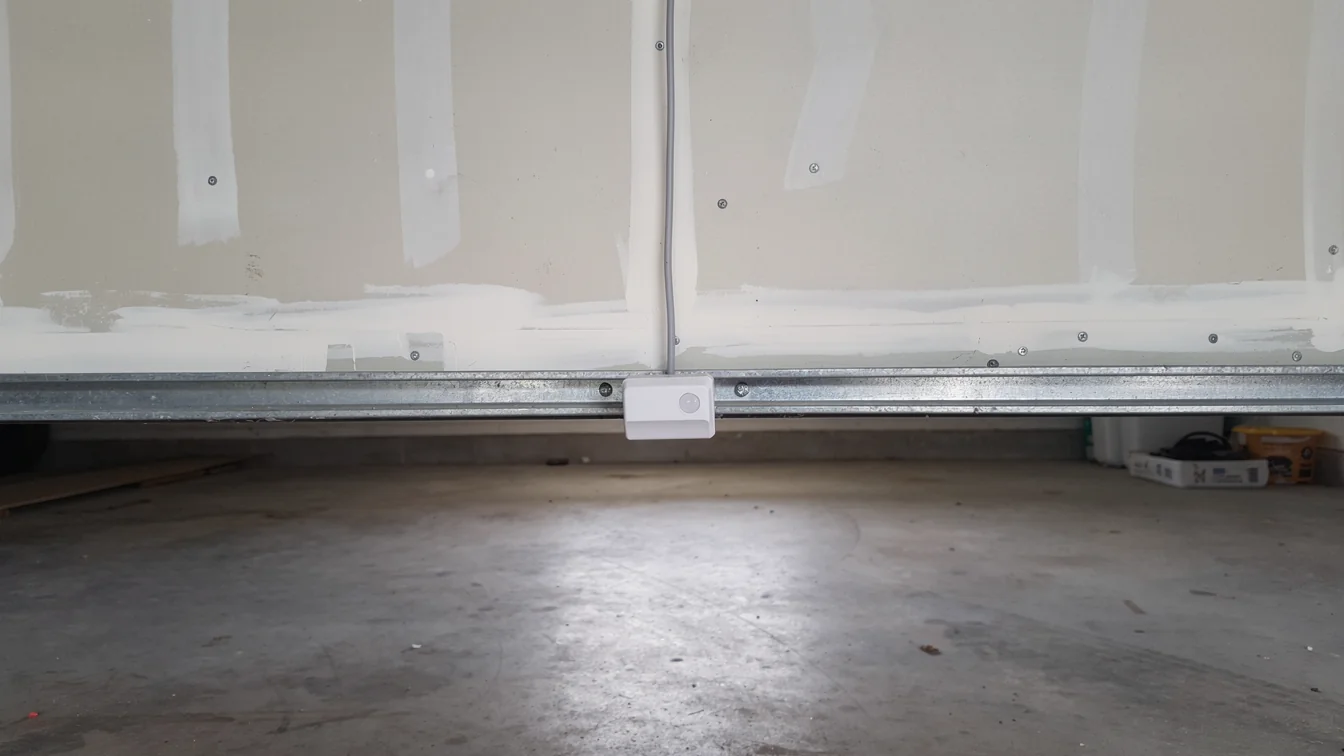
The usual assumption is that a blinking sensor light means a dead sensor. Most of the time that's wrong. The photo-eye itself rarely fails; what fails is the alignment between the two eyes mounted low on each track leg. Homeowners replace the sensor, the light still blinks, and they're back where they started.
In a house built in the 1962-2005 window that makes up most of this area's stock, the sensor brackets are usually the same stamped-steel tabs bolted directly to the track, which is itself bolted to the slab. Nothing about that design was made to be adjusted twice a year. It was made to be set once at installation and left alone, which worked fine until the slab underneath it started moving with the seasons.
So the fix isn't a new sensor. It's loosening the wing-nut on the bracket, walking the eye back into line with a level, and tightening it down again. That's a five-minute job once you know that's the problem, and a frustrating one if you don't.
The Situation
Across the 41 named areas that make up this part of the Eastside, the housing stock clusters tight: built mostly between 1962 and 2005, median year right around 1984. That matters for sensors because it tells you what hardware is actually on the wall. A door from the mid-80s almost never has adjustable, swivel-mount sensor brackets. It has the fixed stamped tab, screwed into a track leg that's been sitting on the same slab for close to forty years.
Nearby areas like Klahanie, just a couple miles southeast, sit on similar lot grading and similar-era construction, so the pattern repeats: garages built into a slight slope, slab settling unevenly over decades, and a sensor bracket that was never meant to move suddenly out of true. Union Hill-Novelty Hill and the areas around Ames Lake, a few miles out, show the same thing for the same reason - not a coincidence, a build era.
With 111,596 owner-occupied houses spread across 200,541 households in this service area, a large share of them are original to that 1980s-90s construction wave. The sensors on those doors are original too, more often than not.
What You Pay
There's no flat number that applies to every call, because what you're paying for changes depending on what's actually wrong. A straightforward re-alignment - loosen the bracket, level the eye, tighten it - is a small job. A bracket that's cracked from being forced back into place one too many times, or a sensor wire chewed through by rodents in a detached garage, costs more because parts and time both go up.
At a median household income of $144,728 in this area, most owners call a tech rather than spend an afternoon under the door with a level, and that's a reasonable choice. The honest limitation here: if your door is original to a 1984-built house and the opener itself is original too, realigning the sensor is sometimes a temporary patch. The opener's logic board can be slow to read even a correctly aligned eye once it's thirty-plus years old, and at that point the conversation shifts from sensor repair to opener replacement.
What Local Conditions Do
This area sits in a cold, moderate climate band, which means the ground under a slab foundation goes through real freeze-thaw cycling every winter - not the deep-freeze heaving you'd get further east in the mountains, but enough expansion and contraction to shift a slab fractions of an inch, year over year. That's the mechanism behind most drift. The track leg doesn't move on its own; the concrete it's bolted to does.
Condensation plays a role too. Cold, damp mornings fog the plastic lens on a sensor eye the same way they fog a car windshield, and a fogged lens reads as a blocked beam even when nothing's in the way. That's not misalignment, and tightening the bracket won't fix it - wiping the lens will.
The practical result: doors in this area need a sensor check more like twice a year than once. Check it going into the wet season and again coming out of the cold stretch, and you catch the drift before it becomes a door that won't close at all.
Frequently asked questions
Why does my garage door sensor light blink even though nothing is blocking it?
Usually it's misalignment, not an obstruction. The two sensor eyes need to point at each other within a tight tolerance, and a slab that's shifted even slightly over the winter throws that off. A fogged lens on a cold, damp morning can also trigger it - wipe both lenses before you assume the bracket's out of line.
How often should sensors be checked on an older Sammamish garage?
If your house dates to the 1962-2005 construction wave that covers most of this area, twice a year is reasonable - once heading into the wet season, once coming out of the cold stretch. That's when slab movement from freeze-thaw cycling tends to show up as drift.
Is it worth replacing the sensors instead of realigning them?
Rarely, on its own. The sensor units themselves are usually fine; the stamped bracket they're mounted on isn't adjustable by design. Realigning is cheaper and faster. Replacement only makes sense if the bracket's physically cracked or the wiring's damaged.
Related garage door services in Sammamish
More garage door guides
Book garage door service in Sammamish
Call now or request a quote - tell us what the door is doing and where you are.