
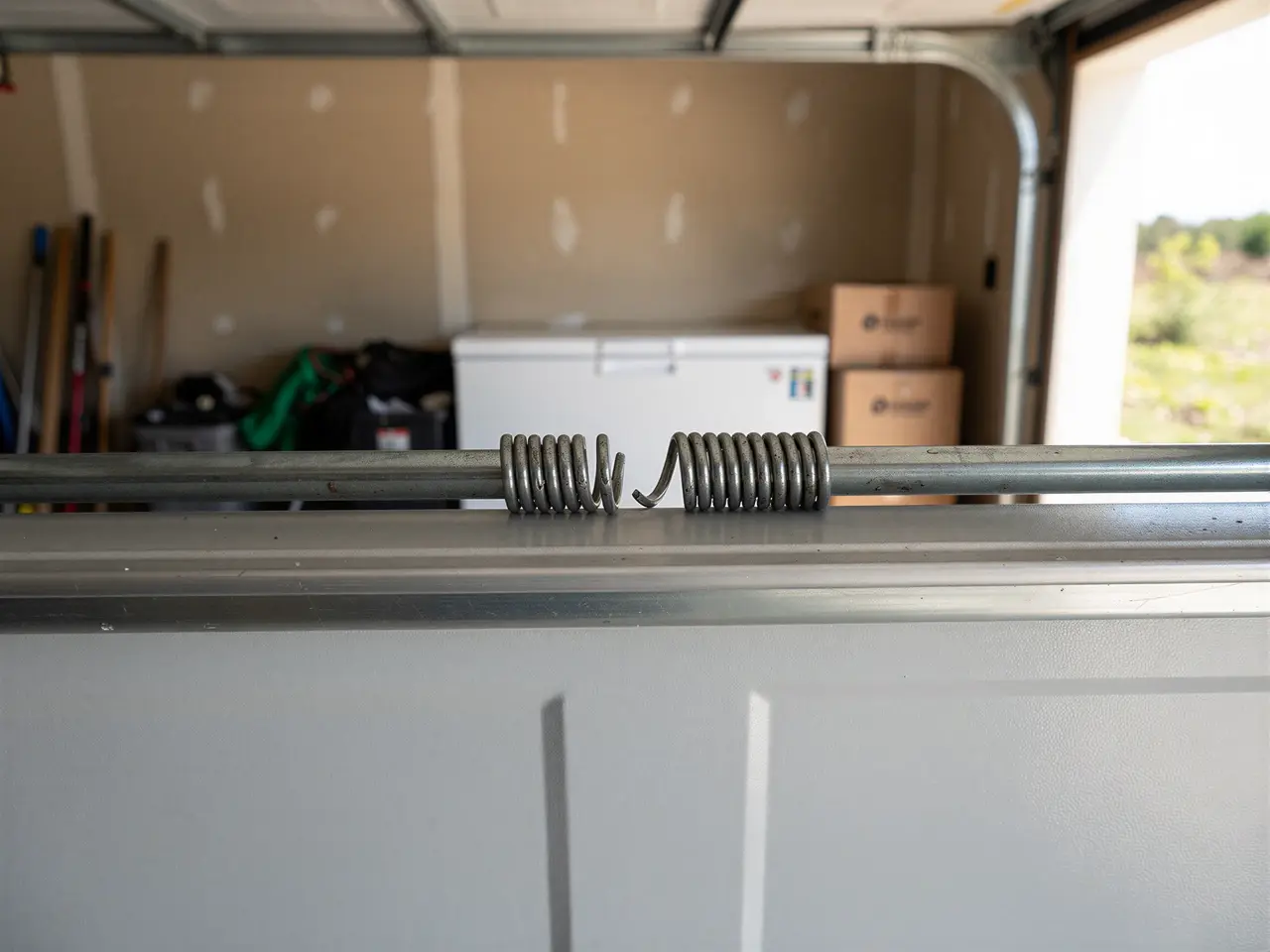
Sammamish, WA · Garage Door Service
Garage Door Spring Repair for Sammamish Homes
Broken torsion spring on a Sammamish garage door? We fix springs on homes built 1962-2005, matched to our cold winter swings. Same service across the area.
- Repairs & new doors
- Springs & openers
- Serving 4 nearby communities
What Causes It Around Here
Most of the houses we get called to in this area went up somewhere between 1962 and 2005, with the bulk of that stock dating to the 1980s and 90s. That matters for springs because torsion springs have a duty cycle - they're rated for a number of open-close cycles, not a number of years - and a 30-to-40-year-old spring is well past the point where metal fatigue takes over from normal wear. You don't get a warning shot. The coil just lets go, usually on a cold morning.
That cold-morning part isn't incidental. This is a moderate cold climate band, and steel contracts in the cold. A spring already near the end of its cycle life loses a little more flex on a 30-degree morning than it would on a mild one, and that's often the push that snaps it. We see a real bump in spring calls through the colder months for exactly that reason.
Across the 41 named areas we cover, the housing is overwhelmingly from that same 1980s-90s build wave, so the springs failing today are mostly original or first-replacement units nearing the same age at the same time. It's not bad luck - it's a housing stock aging together.
The Symptom
The classic sign is a door that won't budge, or one that slams down instead of lowering on its own weight. If you pull the release cord and the door feels like dead weight, or drops fast the last foot, the spring has lost its tension or snapped outright. Sometimes you'll hear it before you see it - a loud bang from the garage, often early morning when the metal is coldest and under the most stress from the cold-climate swing we get here.
A door that's lopsided when it opens, tilting to one side, usually means only one spring on a two-spring system has gone. The opener will often still run the motor, but it's fighting the full weight of the door with no spring assist, which is hard on the opener itself and not something to let run for more than a day or two.
Don't force it. A door under a broken spring is under uneven load, and the cables and rollers are taking stress they weren't built for. If the door is stuck halfway, leave it there and call rather than crank on the emergency release repeatedly.
How We Fix It
We replace torsion springs in matched pairs on most two-spring setups - running one old and one new puts uneven tension on the shaft and shortens the life of the new spring. We size the replacement to the door's actual weight and the track geometry, not just by swapping in whatever was there, since a lot of the original 1980s and 90s hardware in this area was undersized even when new.
While the spring is off, we check the cables, drums, and bearing plates, since a spring failure often takes a toll on whatever it was connected to at the moment it broke. If a cable's frayed or a bearing's seized, we'll say so and price it separately - we don't bundle in work that isn't needed just because the door's already open.
One honest limitation: we stock common spring sizes on the truck, but some older or oversized commercial-style springs aren't something every truck carries, and those can mean a short wait on a part. We'll tell you up front if that's the case rather than guess.
Doing It Yourself
We'll say this plainly: don't try to replace or adjust a torsion spring yourself. These springs are wound under several hundred pounds of tension, and the tools to safely unwind and rewind them - winding bars, a vise grip on the shaft, the right clamp - aren't things most garages have, and the injury risk is real, not theoretical.
What you can safely do is diagnose. Pull the manual release and lift the door by hand with the opener disconnected. If it's heavy, uneven, or drops on its own, that's a spring problem, not an opener problem, and no amount of opener troubleshooting will fix it. You can also look at the springs themselves - a visible gap in the coil means it's already broken.
Beyond that, leave it. This is one job where the DIY route costs more than it saves, both in risk and in the odds of damaging the cables or track trying to work around a spring that's already failed.
Frequently asked questions
How old does a garage door spring usually get before it breaks around here?
Most of the homes we service were built between 1962 and 2005, with the bulk from the 1980s and 90s. Springs are rated by cycle count rather than age, so a spring that age has usually hit the end of its duty cycle, and cold mornings tend to be when it finally gives out.
Can I just replace one spring if only one broke?
You can, but we don't recommend it on a two-spring door. The old spring is close to failing too, and running mismatched tension on either side of the shaft puts uneven load on the opener and the new spring. We replace both so they wear evenly going forward.
Why did my spring break on a cold morning?
Steel loses some flexibility in the cold, and this area sits in a moderate cold climate band. A spring that's already near the end of its fatigue life loses just enough give on a cold morning to snap. It's usually the last straw on a spring that was already worn, not a one-off cause.
Do you carry every spring size on the truck?
We stock the common sizes used across the standard torsion setups in this area. Some older or oversized springs aren't something every truck carries, and in those cases there can be a short wait on the part. We'll tell you up front if your door needs one of those.
By Neighborhood
Spring Repair across the Sammamish area
We also handle spring repair in these Sammamish-area suburbs.
Book garage door service in Sammamish
Call now or request a quote - tell us what the door is doing and where you are.