
Sammamish, WA · Garage Door Service
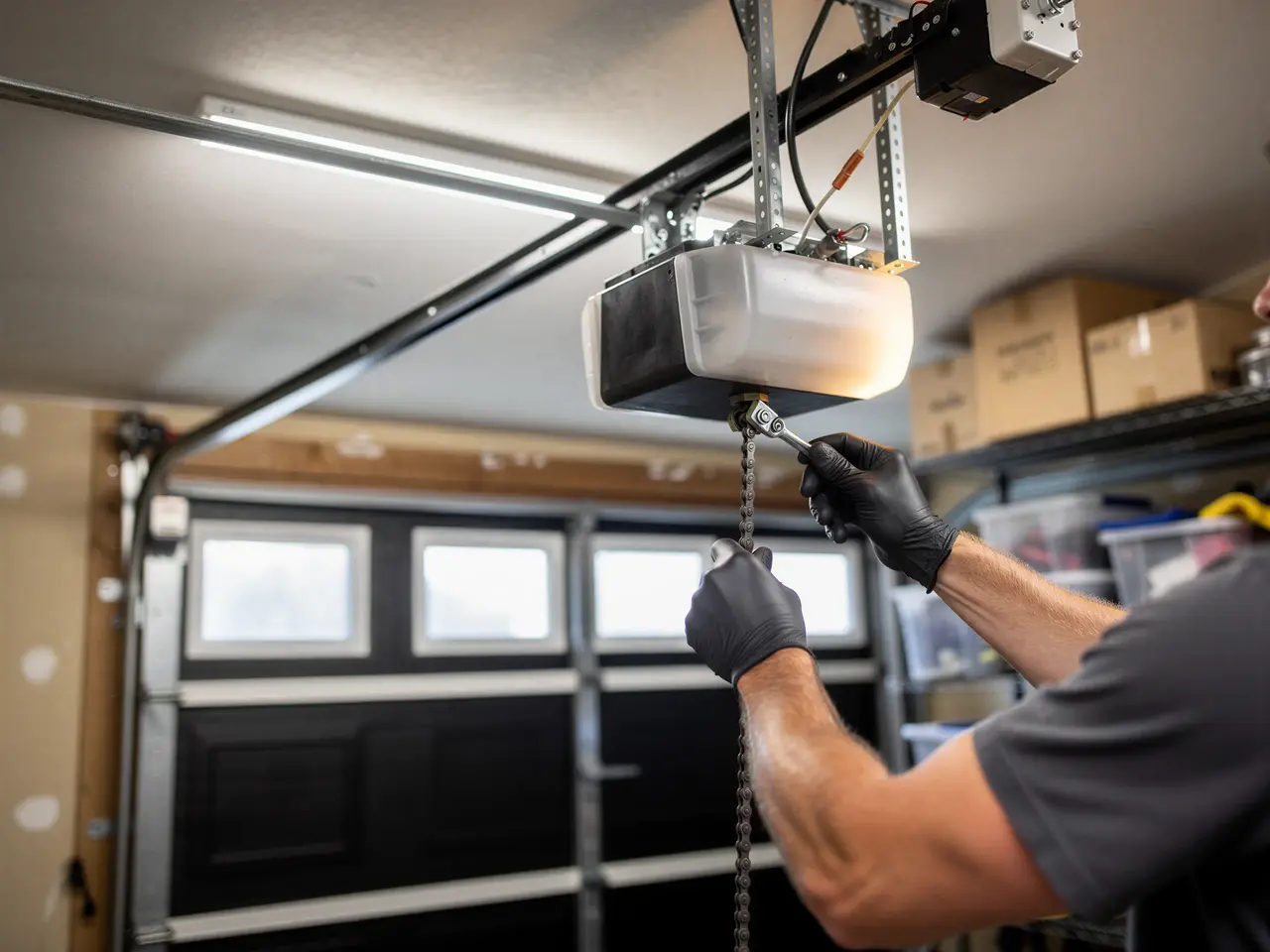
Garage Door Opener Repair Around Sammamish
Opener repair for Sammamish homes built mostly between 1962 and 2005, where cold winters and aging logic boards are the two failure patterns we see most.
- Repairs & new doors
- Springs & openers
- Serving 4 nearby communities
What Causes It Around Here
Most houses in this part of the service area went up between 1962 and 2005, with the median build year landing around 1984. That means a huge share of openers out there are original chain-drive units, or first-generation replacements, built on logic boards and capacitor designs that were never meant to run for three or four decades. Across the 41 named communities this service covers, the construction pattern repeats itself: 1980s and 90s stock, attached garages, and openers mounted in unheated spaces.
The cold, moderate winter band this region sits in adds a second layer to the problem. Openers aren't sealed electronics. Every freeze-thaw cycle pushes condensation into the control board housing and the wall-switch wiring. Over fifteen or twenty years that moisture cycling corrodes solder joints and relay contacts long before the motor itself gives out. That's why so many service calls out here aren't a dead motor at all - they're a board that's failed quietly from the inside.
We don't see this failure pattern the same way in newer subdivisions or in warmer climates. It's specific to this combination: older housing stock plus a cold-moderate climate band that keeps hitting the same components twice a year.
One honest note: if your opener predates 2000, parts for that exact chain-drive unit are often gone. We'll tell you straight when repair isn't worth chasing.
The Symptom
The most common call we get is an opener that runs but the door won't move, or moves part way and reverses. On the older 1980s and 90s units common across this area, that's almost always a worn drive gear or a logic board that's lost its ability to read the travel limits cleanly. You'll also hear owners describe a light that blinks a fixed number of times and then stops - that blink code is the board telling you exactly what failed, but on units built before the mid-90s there's often no manual left to decode it.
A second pattern: the remote works intermittently, especially on cold mornings, but the wall button always works. That's consistent with corrosion on the radio receiver board, not the button circuit - and it tracks with the condensation cycling this climate band puts openers through winter after winter.
Less common, but still regular: the opener runs the motor but the chain or belt doesn't engage, which on an older chain-drive unit usually means the drive gear has stripped. That part wears out on a predictable schedule once a unit passes fifteen years of regular use, which lines up with a lot of the houses built in the early part of that 1962-2005 window.
How We Fix It
We start by testing the logic board separately from the motor, because on units from this era the two fail independently and swapping the wrong part wastes your money. If the board has visible corrosion on the relay contacts - which we see often given the climate band here - we replace the board rather than patch it; a patched board with corrosion underneath fails again within a season.
For drive gear wear on older chain and belt units, we replace the gear and kit rather than the whole opener, provided the motor itself tests clean. That's usually the cheaper call for owners in houses built mid-range in that 1962-2005 window, where the motor housing is often in better shape than the drive mechanism.
When the unit predates reliable parts availability - which happens more than you'd think with houses built before the mid-1980s median - we'll say so directly and walk through replacement instead of billing you for a repair that won't hold. That's the one limitation worth saying plainly: we don't keep installing new boards into housings old enough that the next failure is six months out.
Doing It Yourself
A few things are worth checking before you call anyone. First, the wall switch wiring - rodents and age both chew through the thin bell wire that runs from the switch to the head unit, and that's a five-minute fix with a wire stripper. Second, check the photo-eye sensors at the base of the track; a knocked-out-of-alignment sensor will stop the door and blink an error code that looks like a motor failure but isn't.
If your opener is blinking a fixed code, look up the manual for your specific model before assuming the worst - on units from the 1980s and 90s this code often points to a limit switch issue you can reset yourself.
What you shouldn't do yourself: open the logic board housing, or attempt to re-tension a chain-drive system on a door with a broken or weakened spring. Opener work and spring work look similar from the garage floor but they're not the same job, and combining them without the right clamps is how people get hurt. If the door itself is heavy, slow, or won't stay open on its own, that's a spring problem first - fix that before you touch the opener at all.
Frequently asked questions
Why does my opener only act up in winter?
Cold-moderate winters here put openers through repeated condensation cycles. Moisture gets into the logic board housing and the wall-switch wiring, and over years that corrodes solder joints and relay contacts. A board that's been through fifteen or twenty of these cycles often fails intermittently before it fails completely, which is why winter mornings are when a lot of owners first notice the problem.
Is it worth repairing an opener from the 1980s or 90s?
Often yes, if the motor itself tests clean and the failure is a drive gear or a board we can source. A lot of the housing stock across this service area falls right in that build window, so parts demand has kept some components available. If the unit is old enough that parts are gone, we'll tell you directly rather than bill for a repair that won't hold.
How do I know if it's the opener or the spring?
If the door is slow, heavy to lift by hand, or won't stay open partway, that's spring tension, not the opener. If the opener runs but the door doesn't move, or the light blinks a code, that's the opener or its sensors. Fix a spring problem before touching the opener - running a motor against a bad spring strains the drive gear further.
Related services
Related guides
By Neighborhood
Opener Repair across the Sammamish area
We also handle opener repair in these Sammamish-area suburbs.
Book garage door service in Sammamish
Call now or request a quote - tell us what the door is doing and where you are.