
Sammamish, WA · Garage Door Service
Garage Door Maintenance Across the Sammamish Area
Seasonal garage door maintenance for Sammamish-area homes built mostly between 1962 and 2005, where cold winters and aging torsion hardware wear springs and rollers faster than owners expect.
- Repairs & new doors
- Springs & openers
- Serving 4 nearby communities
What Causes It Around Here
Most of the housing stock in this service area went up between 1962 and 2005, with the median build year sitting around 1984. That matters for maintenance because a door installed in the 1980s or 90s is old enough that its original torsion springs, rollers, and cable are reaching or past the end of a normal service life, but the house itself isn't old enough that anyone's replaced that hardware yet. It's the exact window where neglect catches up with a door.
The climate band here is cold-moderate, not the mild coastal pattern some nearby regions get. That means real temperature swings through the fall and winter, and steel contracts and expands with those swings. A torsion spring that's been fine for a decade can lose tension or develop a stress crack once the cold sets in, especially if it was never lubricated. Nylon rollers get brittle in cold garages and start chipping at the edges, which throws off the whole track alignment.
Across the roughly 111,596 owner-occupied houses in this area, we see the same pattern over and over: a door that ran quiet for years starts grinding, sticking, or reversing unexpectedly right as the weather turns. That's not bad luck. That's 1980s-90s hardware meeting a cold snap with no maintenance history behind it.
The Symptom
The warning signs show up before the door fails outright. A door that used to glide now hesitates partway up, or it closes unevenly with one corner dropping faster than the other. You hear a grinding or squealing sound from the rollers, or a sharp metallic pop from the spring area that wasn't there last year. The opener strains, clicks, or reverses on its own, even though nothing about the opener itself has changed.
In homes from the 1962-2005 build range, this almost always traces back to the same handful of parts: a torsion spring losing its wind, hardened grease on the track, worn end bearings, or cable strands starting to fray where they wrap the drum. None of these are opener problems, even though the opener usually gets blamed first because it's the part that makes noise.
Cold mornings make it worse. A door that's merely sluggish in October can be genuinely hard to lift by hand in January, because the lubricant has thickened and the spring tension has already drifted down. If you're noticing the door is heavier at the bottom of its travel or the remote takes two or three tries before the motor engages, that's the maintenance window talking, not a sign you need a whole new system yet.
How We Fix It
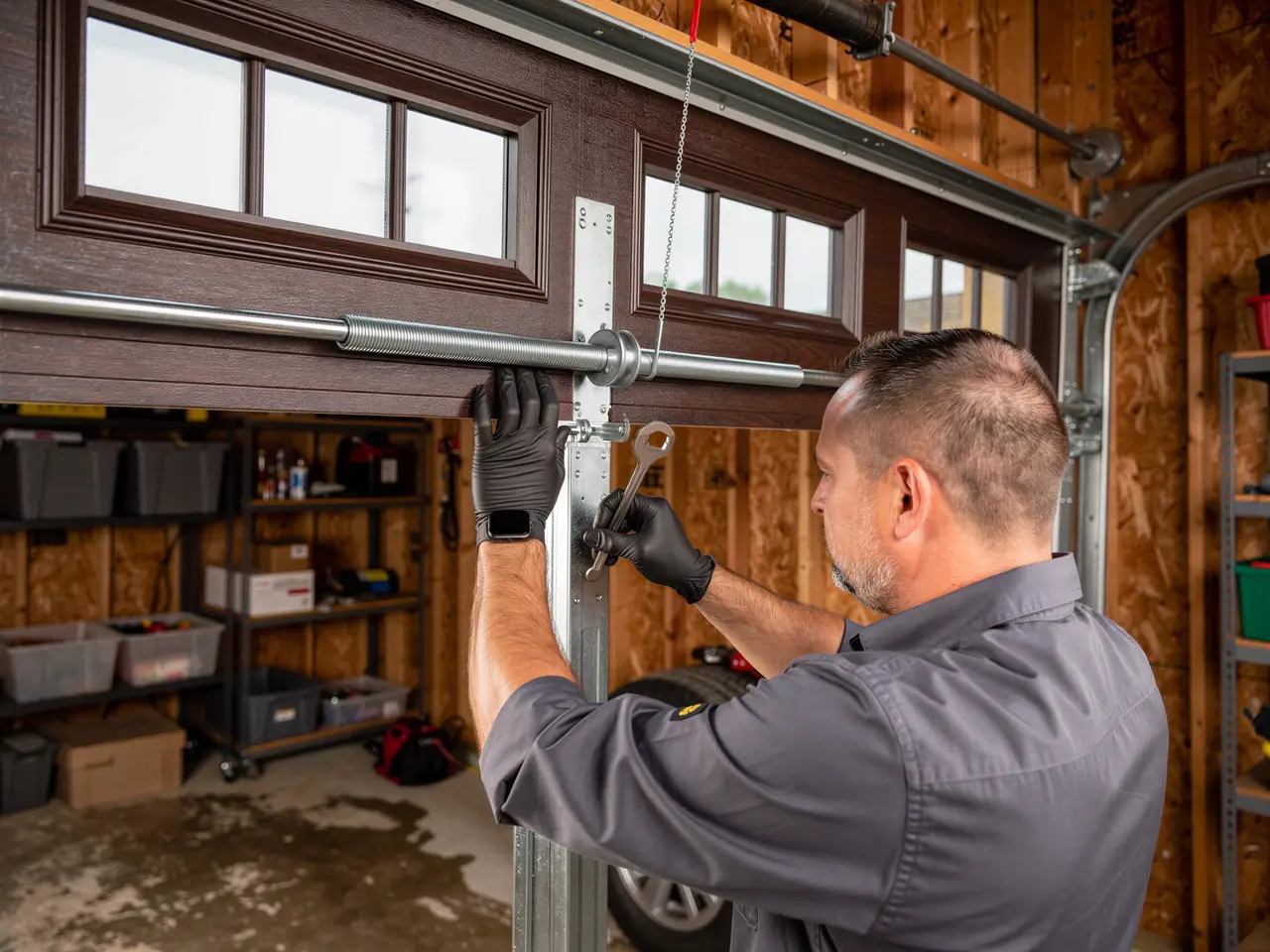
A maintenance visit starts with checking spring tension and balance, since that's the part most tied to the age of the hardware in this area's housing stock. We adjust or flag springs that are drifting out of balance before they snap, inspect cable for fraying at the drum, and check end bearing plates for wear. Rollers get inspected and replaced if they're chipped or flat-spotted, and track gets cleaned and realigned rather than just re-lubed over old grime.
We use a lubricant rated for the cold-moderate swings this area sees through fall and winter, not a general all-purpose grease that gums up when the temperature drops. Opener force settings and the travel limits get checked too, since a spring that's lost tension makes the opener work harder than it was built for, which shortens the motor's life even if the opener itself is fine.
If we find a spring that's already cracked or a cable that's fraying past a safe point, we'll tell you straight that it needs replacing now rather than waiting for the next visit. Maintenance catches most of this early, but it isn't a substitute for replacing a part that's already failing.
Doing It Yourself
There's real maintenance a homeowner can do between visits. Wipe down the tracks and check for debris or dried grease buildup. Visually check rollers for cracks or flat spots. Test the auto-reverse safety feature by placing a block of wood in the door's path and making sure it reverses on contact. Tighten any loose bolts on the track brackets, since vibration works them loose over years of use.
What you shouldn't do yourself is touch the torsion spring. It's under enough tension to cause serious injury, and that's true whether it's a few years old or original to a house built in the 1980s. Leave spring adjustment, cable replacement, and anything involving the wound torsion bar to someone with the right tools and clamps.
We'll also say plainly that not every door is worth maintaining instead of replacing. If the hardware is original to a house from the early part of the 1962-2005 range and multiple components are wearing out at once, a tune-up can turn into a patchwork of band-aids. At that point we'll tell you replacement is the better value, even though it's not the service you called about.
Frequently asked questions
How often should I get my garage door serviced in the Sammamish area?
With the cold-moderate swings this area gets through fall and winter, an annual maintenance visit before the cold sets in catches most spring and roller wear before it turns into a breakdown. Homes with doors original to the 1980s-90s build era benefit from checking twice a year, since that hardware is closer to the end of its service life.
Why does my door get harder to open in the winter?
Cold temperatures thicken standard lubricant and cause steel springs to lose a bit of tension as they contract. If the spring was already drifting out of balance from age, a cold snap is often what pushes it from sluggish to genuinely hard to lift. That's a maintenance issue, not a sign the opener is failing.
Can I just replace the rollers myself and skip a full maintenance visit?
You can replace worn rollers yourself if you're comfortable with basic tools, but rollers rarely fail alone. If your door is from the 1962-2005 build era, worn rollers usually mean the track alignment and spring tension need a look too, so a full check tends to be worth more than a single-part swap.
Related services
By Neighborhood
Maintenance across the Sammamish area
We also handle maintenance in these Sammamish-area suburbs.
Book garage door service in Sammamish
Call now or request a quote - tell us what the door is doing and where you are.